Science on Tap

Science on Tap is a monthly science café in Philadelphia for anyone who is interested in getting together with other people to discuss a range of engaging science topics. It's held at National Mechanics , a relaxed, convivial bar in Old City, and features a brief, informal presentation by a scientist or other expert followed by lively conversation.
Science on Tap is held on the second Monday of every month at 6 pm. This program is for people age 21 or older, but folks under 21 can come with a chaperone who is older than 25.
Science on Tap is sponsored by a consortium of five Philadelphia institutions: the Academy of Natural Sciences of Drexel University, The American Philosophical Society (APS) Museum, Chemical Heritage Foundation, Mütter Museum of The College of Physicians of Philadelphia, and the Wagner Free Institute of Science.
- February 13, 6 pm
- “Violence in the Laboratory: How Science Changed War and War Changed Science”
- M. Susan Lindee, Ph.D., Associate Dean for the Social Sciences; Professor, Department of History and Sociology of Science, University of Pennsylvania
- Over the last century science and war have been transformed in tandem. Science has become more tightly linked to militarization and state power. Today, many forms of scientific research are supported with military funding sources even when the subject matter (e.g., mapping genes, tracking environmental change, or studying the brain) seems remote from any practical application on the battlefield. At the same time, military conflict has become more technically sophisticated in ways that have reshaped the battlefield experience for both soldiers and civilians.
- We now see remarkable levels of “asymmetrical risk,” for example, in which combatants commuting to a center in the American Southwest can guide attacks with drones at sites on the other side of the world. Scientific, high-tech warfare changes the rules of both war and science. In this discussion, Dr. Susan Lindee will raise questions about how science and war have changed in the 20th century.
- Presented by the American Philosophical Society.
- March 12, 6 pm
- “Tiny Conspiracies: Cell-to-Cell Communication in Bacteria”
- Dr. Bonnie Bassler, Squibb Professor of Molecular Biology at Princeton University
- Microbiologist Bonnie Bassler made the ground-breaking discovery that bacteria can communicate with one another through a process called “Quorum Sensing.” Quorum sensing is the cell-to-cell communication that allows bacteria to coordinate and synchronize, acting as a multi-cellular organism. Dr. Bassler’s current research focuses on disease therapies that interfere with quorum sensing and prevent bacteria from carrying out a deadly attack. She will discuss her groundbreaking research and its profound implication for the fields of Biology and Medicine.
- Presented by the Wagner Free Institute of Science.
- April 9, 6 pm
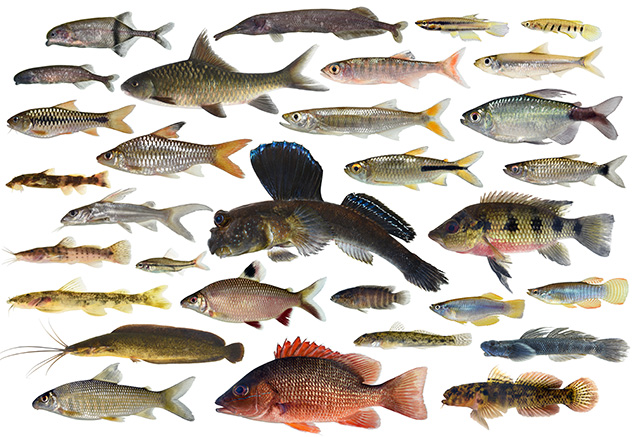
- “Mongolian Fish Hunt”
- Dr. Mark Sabaj Pérez, Collection Manager of Fishes at the Academy of Natural Sciences of Drexel University.
- Join Dr. Mark Sabaj Pérez as he shares tales of the Academy’s ichthyological adventures in northern Mongolia. In 2006 Pérez led a team of American and Mongolian scientists that set out from Ulaanbataar to find the Amur catfish, the world’s most northern catfish and smaller cousin to the giant Wels catfish made famous in many anglers’ prized photographs. The challenges of Mongolian fieldwork ranged from outsmarting difficult transportation and fishing in icy rivers to enduring freak summer hailstorms and the endless drone of the Eagles’ “Hotel California.”
- Follow the explorers’ adventures as they traverse northern Mongolia on roads that don’t exist and traipse through infinite herds of goats and sheep without the help of navigational aids…all to find one of nature’s most elusive fish.
- Presented by the Academy of Natural Sciences of Drexel University.
- May 14, 6 pm
-
Presented by the Mütter Museum of the College of Physicians of Philadelphia.
Past Science on Tap
- January 9, 2012
- Antoinette Thwaites
“When Good Drugs Go Bad” - November 14, 2011
- Jason C. Poole
“Supermassive skeleton skillfully secured from South America” - October 10, 2011
- Jonathan Seitz
“The Science of Demonology” - September 12, 2011
- Joseph Rucker
“Chile Peppers: Heat and History” - July 11, 2011
- Thaddeus Phillips
“Underwater Communications: Fiber Optics & Whale Songs” - June 13, 2011
- Evi Numen
“Imaging the Body Abnormal: Art & Artifice in Historical Medical Photography” - May 9, 2011
- Rich Horwitz
“Shocking Streams and Freaky Fish” - April 18, 2011
- “Quizzo Spectacular”
- April 11, 2011
- Solomon H. Katz
“Fermentation: The Amazing Mother of it All in Wine and Beer” - March 14, 2011
- Christine Bartos
“Living the High Life: Insights on the Private Lives of Giraffes” - February 14, 2011
- Sam Kean
“The Disappearing Spoon and Other True Tales of Madness, Love, and the History of the World from the Periodic Table of the Elements” - January 10, 2011
- Annie Brogan
“Yellow Fever Epidemics in Philadelphia” - December 13, 2010
- David Hewitt
“Fertilizer: More Than Just The Brown Stuff” - November 8, 2010
- Scott McRobert
“Bedtime Stories for Fido: Life in a Biodiversity Laboratory” - October 11, 2010
- James Fleming
“A Toast to Fixing the Sky” - September 13, 2010
- Beauvais Lyons
“The Association of Creative Zoology” - July 12, 2010
- Lisa Rosner
“The Burke and Hare Murders: Sixteen Good Reasons Not to Drink Whisky with Strangers”
- June 14, 2010
- David Velinsky
“The Slippery Facts About Oil Spills” - May 10, 2010
- Derrick Pitts
“The Search for the Other Earth” - April 12, 2010
- Gwen Ottinge
“What's in the Air? Low-tech Tools for Finding Out” - March 8, 2010
- Alexandra Krull Davatzes
“The Impact of Meteors on the Origin and Early Evolution of Life” - February 8, 2010
- Lori Jahnke
“Imperialism and the Family Business: Population Structure and Political Change on the Central Coast of Peru” - January 11, 2010
- Ernie Schuyler
“The Origin and Evolution of Beer” - December 14, 2009
- Peter Dodson
“Dinosaur Studies in China” - November 9, 2009
- Colin Purrington
“Embracing Darwin” - November 2, 2009
- Flashpoint Theater Company
“Dramatic Evolution: Bringing Science to the Stage” - October 12, 2009
- Sabrina McCormick
“No Family History: Investigating What's Behind the Breast Cancer Epidemic” - September 14, 2009
- Robert Hicks
“Bringing Physics to Physicians” - July 13, 2009
- Ted Daeschler
“Cold Hard Science: Fossil Discoveries in the Canadian Arctic and the Origin of Limbed Animals” - June 8, 2009
- Janet Monge
"The Unknown Skeleton – Forensic Anthropology and the Unsolvable Case" - May 11, 2009
- Scott Gilbert
“How the Tortoises Got their Shells and the Finches Got their Beaks: The Role of Evo-Devo in Solving Darwin’s Dilemmas” - April 13, 2009
- Brenda Casper
“Take Some Fruit and Pass the Seeds”